
Omaha Clear Radon Mitigation: Omaha, NE Radon Mitigation Systems and Radon Testing
Omaha Clear Radon Mitigation installs radon mitigation systems in Omaha, NE homes, most of them one suction point under the basement slab, a sealed pipe and a fan above the living space. A sub-slab system usually runs $1,200 to $2,000 installed. The bid names the suction point, the pipe route and the spot where the fan will sit.
Request a quote
Have a test result, or a buyer asking for one? Say the number and the deadline, and you hear a rough price by phone.
When hiring someone for radon mitigation, Nebraska only lets state-approved persons do this kind of work. Around 60% of Omaha's housing was built before 1980, where the older basements have hollow blocks where soil gas can accumulate. Be sure to get a written bid and what their scope of work is going to be.
- Most sub-slab systems, $1,200 to $2,000 installed
- A short radon test runs 48 hours or more
- Fan in the attic, garage or outdoors, never under rooms
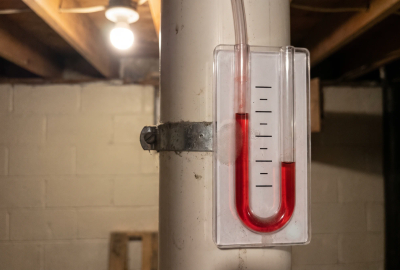
- The pipe gauge marked at start-up, so you can read it later
- A retest after the work, by someone other than the installer
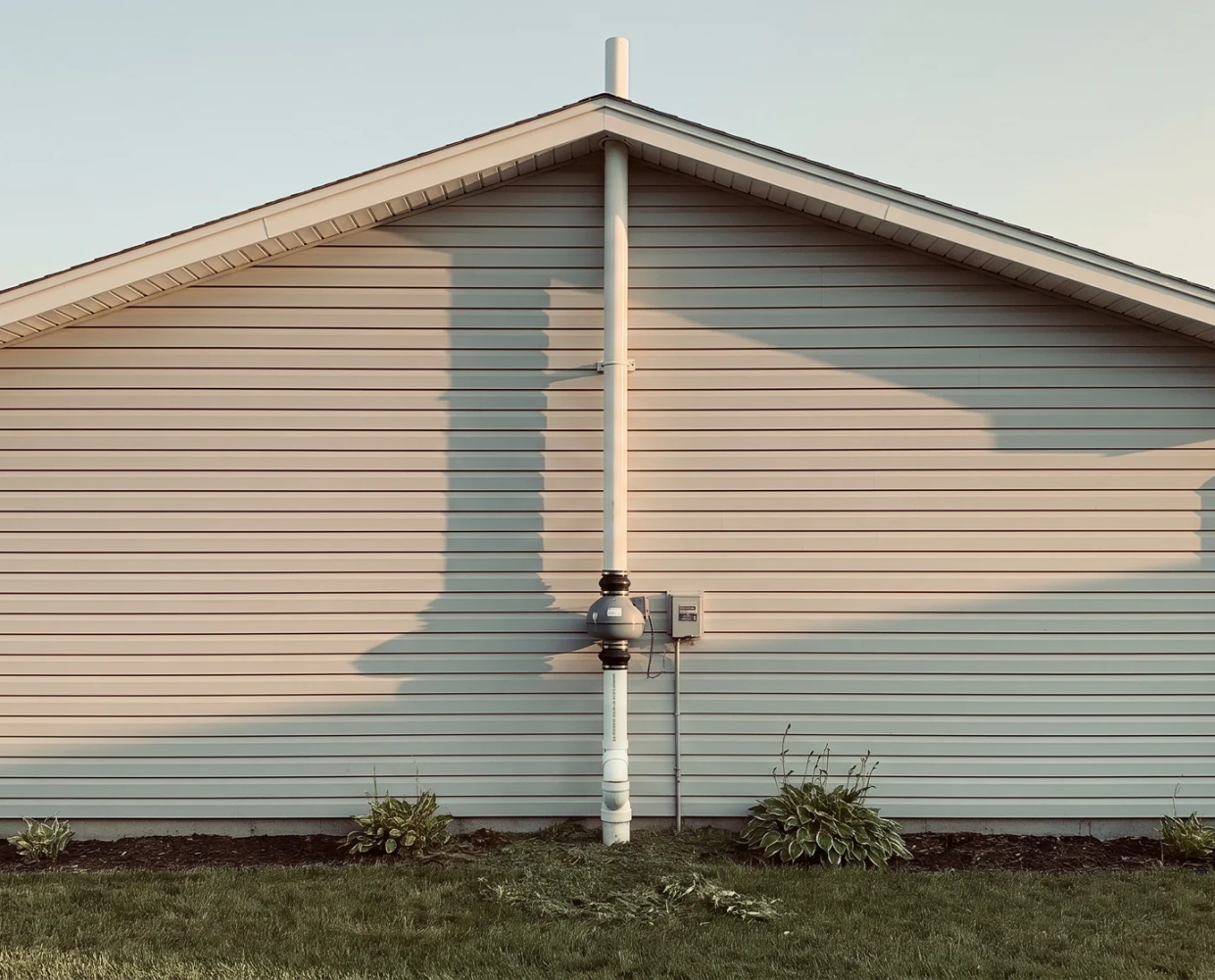
At a glance
| Sub-slab system, installed | $1,200 to $2,000 |
|---|---|
| Test by a radon professional | $125 to $400 |
| Fan electricity | About $70 to $80 a year |
| Fan life | 5 to 10 years |
| Shortest valid test | 48 hours |
| EPA fix-it level | 4 pCi/L |
| Nebraska license | Required to mitigate |
Residential Radon Mitigation Systems, Testing and Repair
Each card starts from the reading and the floor under the house, because those two set the system.
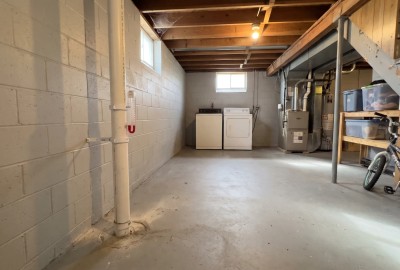
Radon Mitigation System Installation
Radon mitigation system installation on a typical house can run $1,200 to $2,000 installed. Part of that cost is boring a hole through the slab in an area that is best for your home, and then digging a pit in the gravel below. All the cracks need to be sealed, and the joint where the wall and the floor meet. The exhaust, where all the gases go, needs to be above the roof.
Radon Testing in Omaha Homes
Radon testing in Omaha homes can run around $125 to $400 for a professional test. The EPA requires the test to be in the lowest part of the home that someone uses regularly. The test should run a minimum of 48 hours and not be in the kitchen, the bathroom or the laundry, as any room with fans, steam or moving air can throw off the reading.
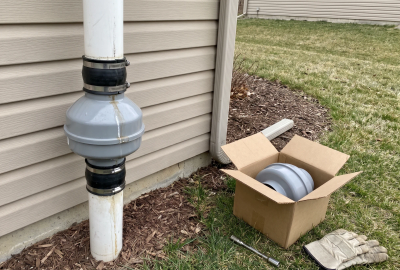
Radon Fan Replacement and System Repair
For radon fan replacement and system repair, the fan life for these systems is approximately 5 to 10 years, whereas the piping, which carries out all the gases, can last 20 to 50 plus years. There are cases where ice can form at the top of the exhaust cap and plug the pipe up to the point where the fan will stop.
Radon Inspection for Home Sales
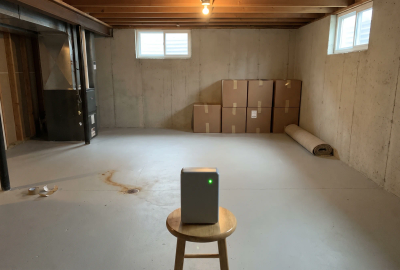
Added to a home inspection, a radon test usually costs $75 to $300 and runs during the inspection window. Buyers' testers often use a continuous monitor, which logs the hours and shows an opened window or a moved device. We read a seller's report line by line and say whether the number calls for a system before the closing date.
Crawl Space Radon Mitigation
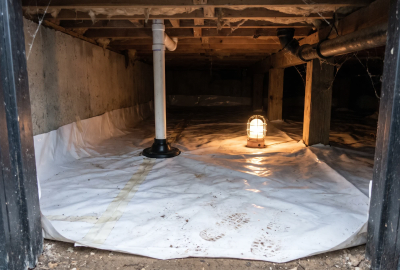
Homes that need crawl space radon mitigation require a crawl space membrane, which is a heavy plastic sheet that covers all areas of the dirt floor under the house. Then there is suction from the fan, where the gas is pulled from underneath the plastic. All the seams need to be taped and the edges need to be fastened for it to work properly.
Sump Pit Sealing for Radon
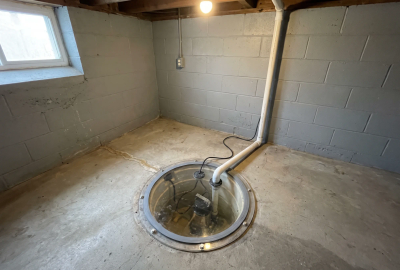
An open sump pit is a short path from the drain tile to the basement air. A gasketed lid bolted over the pit closes it and still lets the pump be pulled for service. Where the drain tile runs around the whole footing, the sump itself can serve as the suction point. We seal the lid with the discharge pipe and the pump cord passing through it.
Block Wall Radon Depressurization
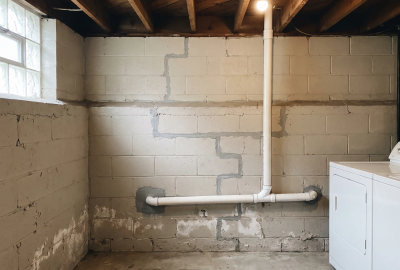
Hollow concrete block carries soil gas up through its cores, and many Omaha basements built before 1980 have block walls. A block-wall system pulls from inside the cores as well as from under the slab. We seal the top course and the open cores first, because an unsealed wall leaks the suction meant for the floor.
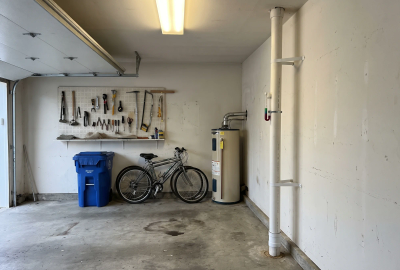
Slab-on-Grade Radon Mitigation
Slab-on-grade radon mitigation means there is no basement and the house sits right on a slab of concrete poured on the ground. The radon mitigation specialist would then determine a suction point where the hole in the floor would go for the pipe that pulls out the gas from below, usually in a closet or a garage or outside.
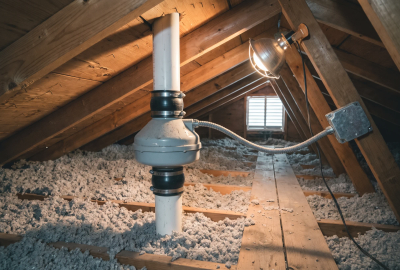
Passive Radon System Activation
Some houses have a capped radon pipe from the builder but no fan. Activating it means adding a fan sized for that pipe, a gauge and a label. We check the pipe for water traps and the attic for room to mount the fan plumb, because a passive pipe with no slope or no room for a fan has to be rerouted first.
Commercial and Rental Radon Mitigation
Owners with more than one roof, and the people who sell houses, need the same numbers on paper.
Rental Property Radon Mitigation
A landlord gets one test per unit on the lowest lived-in floor, then a radon mitigation system only where the reading calls for one. We leave the system label and the papers at the fan, ready for the next tenant.
Radon Testing for Real Estate Agents
An agent with a closing date needs a test started on a known day and a report a buyer can read. We say the earliest result date before the device goes down. Short notice is normal in a sale.
Multifamily Radon Mitigation
Nebraska applies a separate standard to apartments and other multifamily buildings, and the supervising specialist needs an extra course. We confirm that course before quoting a building with shared basements.
Radon Mitigation for Home Builders
A builder who sets the gravel and the pipe before the pour turns the later fan into a short job. We walk the slab plan with you and mark the riser spot, so the pipe lands in a closet and not a bedroom.
Commercial Building Radon Mitigation
Offices and shops over 2,000 square feet fall under Nebraska's large-building standard. We start with tests in each occupied ground-floor room.
Specialty Radon Services
Smaller jobs that come after the first system, or before a decision on one.
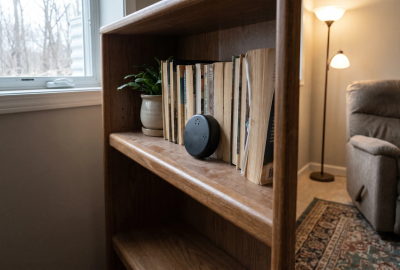
Long-Term Radon Testing
A long-term test runs more than 90 days. It averages out the swings a short test can catch, a windy week or a wet one, and EPA treats a long-term result of 4 pCi/L or more as the point to fix. If it's your house, before buying a system to fix it, we would opt for going longer on the test, more than 90 days. That is ample time to give an average of what's going on in the basement.
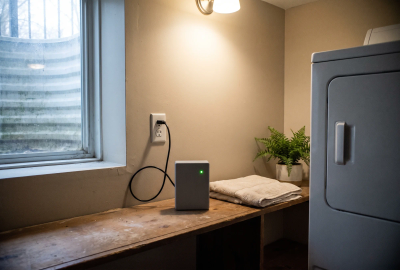
Continuous Radon Monitor Setup
A digital monitor shows the reading hour by hour. Its first numbers take most of a day to settle, so ignore the first morning. We place it where a test would go, in the lowest room you use, and show you how to read the daily average instead of chasing one spike after a storm or a windy night with the furnace running hard.
Radon Retest After Mitigation
EPA advises a test after the work by a tester who did not install the system. Still high? Then the gauge and the slab seal are the first two things a radon mitigation contractor should recheck, before anyone talks about a bigger fan. We would follow EPA's advice and have another company, other than the one that put in the system, do the test. An outside firm, other than the one that installed it, has no reason to want a good result.
Older Radon System Upgrades
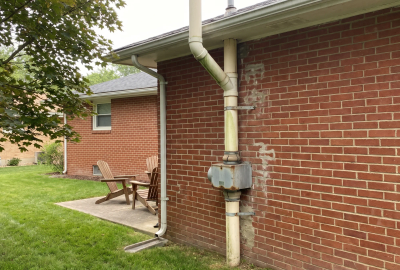
Nebraska's install rules do not reach systems put in before April 6, 2003. Those may fall short of today's fan and gauge rules. We write down what falls short of today's standard and price each change apart. If money is tight, move the fan now and add the label later.
Radon Pipe Rerouting and Fan Noise
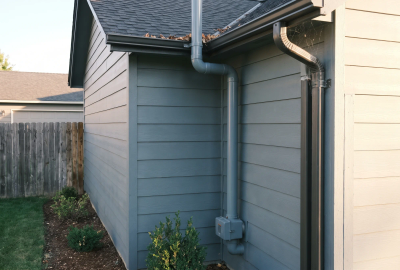
A pipe on the siding or a hum through the bedroom wall is usually a route problem, not a bad fan. Moving the fan to the garage attic, or isolating the pipe where it touches the framing, cuts the noise. To our eye a reroute beats a muffler. We sketch both routes before any new hole is cut. I can remember a family member years ago having to deal with radon mitigation. They had no idea that this could even be a problem. But several neighbors had this kind of work done and randomly talked about it. After a few of these conversations, my relative decided to hire a professional who does radon mitigation to come and check his basement out. Their findings were so minuscule that they just recommended ventilating the basement.
Got a radon number back and a bid to match?
Tell us the reading, the kind of test and whether the house has a basement, a slab or a crawl space. We say what a fair system for that house includes, before anyone drills the floor.
How a Radon System Goes In
The number on your test is where the job starts, so we ask how the house was closed up when it was taken.
- You tell us the reading, the test type and the dates. If a second test makes more sense than a system, we say so.
- A walk through the basement. We look at the sump, the floor drains, the slab cracks and any block walls.
- A small test hole or two, with a gauge, to see how far the suction will reach under the slab.
- A written bid with the suction point, the pipe route and the fan spot drawn on it.
- Before the install, the business notifies the state with the address and the date.
- The radon mitigation installation itself, coring and sealing first, then the pipe and the fan. Plastic goes down where the crew walks.
- The gauge is marked at its start-up reading and the label goes on the pipe. The retest comes after.
Nebraska’s Radon License
In Nebraska nobody may measure or mitigate radon in someone else’s home without a state license. Ask any firm for its business license number and the name of the mitigation specialist on your job.
Where the Fan Goes Under Nebraska Rules
Since the fan pulls gas from under the floor and then pushes it out, the fan should not go in any heated or cooled rooms, and not in the basement under any rooms. If it sat inside the house and some type of leak happened with it, the gas would go right into where the people live. So Nebraska bans putting it anywhere in the house where people are. It’s okay to put it in an unused attic or garage or anywhere outdoors, and if it draws a big share of its circuit, it should be on its own circuit.
How Long Radon Work Takes
| Step | Typical time |
|---|---|
| Short radon test | 48 hours or more |
| Long-term test | More than 90 days |
| Continuous monitor | 30 days or more |
| State notice | Before each install |
| Test after the work | 48 hours or more |
What Radon Mitigation Costs in Omaha
The floor under the house moves the price more than anything else.
| Job | Typical range |
|---|---|
| Sub-slab system | $1,200 to $2,000 |
| Drain-tile suction | $900 to $1,800 |
| Sump pit sealed, with lid | $900 to $2,500 |
| Block-wall system | $1,800 to $3,000 |
| Crawl space encapsulation | $3,000 to $15,000 |
| Radon professional’s test | $125 to $400 |
| Short-term test kit | $10 to $25 |
| Permit, where needed | $25 to $150 |
National installed ranges for 2026, rounded, for the system or the test alone. A firm price comes after someone has seen your basement.
Why One House Costs Twice Another
The pressure test under the slab decides how many suction points a house needs, and each extra point adds coring and pipe. A crawl space beside a basement needs its own sealed membrane too.
After the System Is In
The fan draws about as much as a 60-watt bulb, near $70 to $80 a year. Plan on a new fan within 5 to 10 years.
One pipe, one fan, and a gauge you can read
Most Omaha systems pull air from under the basement floor and push it out above the roof line. The gauge on the pipe shows it is working; a test afterwards shows it worked.
Radon Work From Elkhorn to the Missouri
Omaha Clear Radon Mitigation works across Omaha, NE and its suburbs: Papillion, Bellevue and Gretna to the south, Elkhorn and Valley to the west, Blair up north, and Council Bluffs over the river.
Douglas County, NE
- Ralston
- Bennington
- Valley
Sarpy County, NE
- La Vista
- Papillion
- Bellevue
- Springfield
- Gretna
Pottawattamie County, IA
- Carter Lake
- Council Bluffs
Washington County, NE
- Fort Calhoun
- Blair
Saunders County, NE
- Yutan
Cass County, NE
- Louisville
- Plattsmouth
Across the river, Iowa asks a radon firm for its own state credential, and the post-mitigation test there starts one to 30 days after the work.
About 60% of Omaha's housing was built before 1980, and older basements bring block walls, open sump pits and floor drains into the radon job.
Request a quote
Call (531) 201-2794 with your reading in hand, or type what you know below and someone on our side rings you.
Radon Questions Omaha Homeowners Ask, From Readings to Fans
What radon level should I fix?
We recommend going with EPA's advice that if the level is 4 pCi/L or higher, action should be taken. If it's under 4, test again later; the EPA says even that level carries some risk.
Does radon get worse in winter?
Often the radon levels can change with the seasons. The wind and the rain can move the reading, and also a heated house can pull in soil gas.
Does sealing basement cracks fix radon on its own?
Sealing basement cracks alone rarely fixes the gas problem. The gas will just be pushed somewhere else. A fan system and a sealed floor can help keep the gases under control.
Can I install a radon system myself in Nebraska?
Yes, you can install a radon system yourself. Nebraska's radon license is only for people who work in other people's homes. Test before you put in a system, and test after the system is in for a good 90 days.
How can I tell if my radon fan is working?
There will be a U-shaped tube gauge on the pipe. Inside, there will be a colored liquid, and when the fan pulls, the liquid sits higher on one side. If the liquid's the same on both sides, the fan's not working.
Do I need a permit for radon mitigation in Omaha?
Ask who wires the fan and who pulls any permit. Nebraska's radon rule sends all fan wiring to the state electrical code, and the stricter of the state and local rules wins.
Will the radon pipe run up the outside of my house?
The pipe can run through the garage, then into the attic, and out through the roof, with nothing on the side of the house.
Does homeowners insurance cover radon mitigation?
Usually radon mitigation is not covered by your homeowners insurance, as it typically only pays for sudden damage.
Can a plug-in radon fan run on an extension cord?
Nebraska requires a cord no more than six feet long if the fan is plugged into an outlet. It bans a plug outdoors and requires a locked outlet cover labeled "Radon Fan- Do Not Unplug."